There is a moment every summer when you reach for your favorite piece and notice something is off.
A stone that has lost its depth. A silver surface that has gone from luminous to dull. A chain that carries the faint ghost of something chemical it should never have touched. It is a quiet kind of loss, the kind that happens gradually and then all at once.
Summer jewelry care is not a chore. It is an act of respect for the craft that went into making what you wear. And once you understand what heat, humidity, sweat, and sunscreen actually do to fine jewelry, the way you handle your pieces changes completely.
How to Protect Jewelry During Summer Months
Summer is relentless on fine jewelry in ways that other seasons simply are not.
The combination of elevated heat, increased moisture in the air, and direct sun exposure creates conditions that accelerate tarnish, loosen settings, and dull the surface of even the most carefully finished pieces. Understanding how to protect jewelry during these months starts with understanding what your pieces are actually made of and what those materials respond to.
Sterling silver, the foundation of much of Bahlko's handcrafted gemstone jewelry, is a reactive metal. It oxidizes naturally over time, and heat speeds that process. Rhodium-plated surfaces hold up significantly better under summer conditions because the plating creates a barrier between the silver and the environment. That barrier is not permanent, but it is meaningful, and maintaining it through proper summer jewelry care extends the life of the finish considerably.
Natural gemstones are not passive in summer conditions either. Porous stones absorb moisture, oils, and chemicals. Dense stones like lapis lazuli and garnet are more resilient, but even they respond to sustained exposure to heat and direct sunlight with subtle shifts in color saturation over time.
The single most effective thing you can do to protect jewelry in summer is to put it on last and take it off first. Last thing before you leave the house. First thing when you come home. That discipline alone eliminates the majority of seasonal damage.
Protect Jewelry from Sweat and Moisture Damage
Sweat is not something people talk about in the context of fine jewelry. They should.
Perspiration contains salt, amino acids, and trace minerals. On extended contact with metal surfaces, that chemical cocktail causes tarnish to develop faster and more unevenly than standard oxidation. To protect jewelry from sweat, the approach is straightforward but requires consistency.
After wearing jewelry on a warm day, wipe each piece with a soft, dry cloth before storing it. Do not use paper towels or rough fabrics. A microfiber cloth, or even a clean cotton t-shirt fabric, removes surface residue without scratching. This takes thirty seconds and extends the quality of the surface finish by months.
For pieces worn close to the skin in summer, consider rotating your collection. Wearing the same ring or pendant every day in peak humidity gives residue no opportunity to be cleared. Rotating between two or three pieces means each one gets rest time, which matters more than most people expect.
Avoid wearing fine jewelry while swimming. Chlorinated pool water is particularly aggressive toward silver and toward certain gemstone treatments. Saltwater is not gentler. The natural druzy and gemstone pendants at Bahlko are built to last, but no fine jewelry is built for sustained submersion in chemically altered water.
Sunscreen Effect on Jewelry: What You Need to Know
This one surprises people every time.
The sunscreen effect on jewelry is real and it is consistent. Most sunscreens, particularly chemical sunscreens, contain compounds that react with metal surfaces to create a cloudy, discolored film. This film is not permanent, but removing it requires more than a dry wipe. And on certain gemstones, particularly porous or softer stones, chemical residue from sunscreen can penetrate the surface and be difficult to remove completely.
The practical rule is: apply sunscreen first. Let it absorb fully into the skin, which takes at least ten minutes with most formulations. Then put on your jewelry. This sequence is not about inconvenience; it is about protecting the integrity of your pieces.
Mineral sunscreens, which use zinc oxide or titanium dioxide rather than chemical filters, are generally less reactive with metal surfaces. If you wear fine jewelry consistently through summer and want to minimize the sunscreen effect on jewelry, switching to a mineral formulation is worth considering.
If you notice a white or grayish film on a silver piece after a day in the sun, a gentle soak in lukewarm water with a very small amount of mild dish soap, followed by a soft brush and a thorough rinse, will usually clear it. Dry completely before storing.
Jewelry Cleaning Tips for Hot Weather
Hot weather cleaning is its own category, and the jewelry cleaning tips that work in winter do not always translate.
In summer, pieces need cleaning more frequently because they are exposed to more. More sweat, more sunscreen, more environmental residue from outdoor settings. The cleaning process does not need to be more aggressive. It needs to be more regular.
A soft toothbrush, warm water, and a tiny amount of gentle soap is sufficient for most sterling silver pieces. Work in small circles, rinse thoroughly, and dry with a soft cloth. Never leave silver wet. Moisture sitting on a surface, especially in the crevices of an intricate setting, is an invitation for tarnish to take hold.
For oxidized sterling silver pieces from the Bahlko atelier, avoid aggressive cleaning. The oxidized patina, that deliberate darkening that gives depth and shadow to intricate designs, can be diminished by harsh cleaning agents or abrasive polishing cloths. A gentle wipe is usually all that is needed. If the patina has lightened over time, that is a natural process, and it can be addressed by a professional jeweler rather than at home.
Ultrasonic cleaners are not appropriate for all stones. Avoid them entirely for druzy formations, porous stones, and any piece where stones are set with adhesive rather than prongs or bezels.
Best Jewelry for Summer Wear: Lightweight and Durable Picks
Summer dressing has its own logic. Lighter. Bolder in a different way. More skin.
The best jewelry for summer wear is not necessarily the most delicate. It is the most considered. Pieces that move well, that do not trap heat against the skin, that hold their finish under repeated exposure to summer conditions.
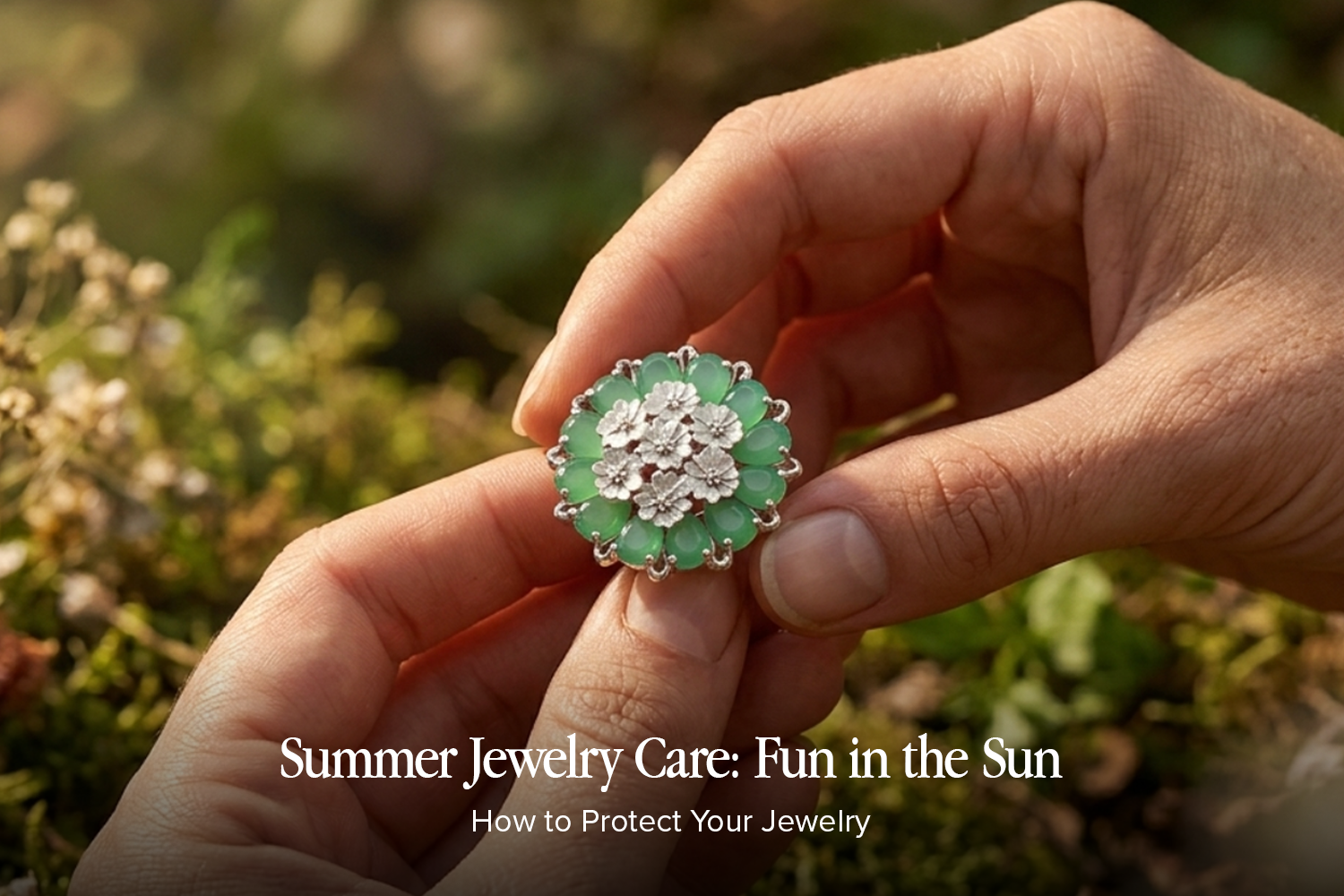
Bahlko's gemstone ring collection offers several styles that translate beautifully into summer wear. A single statement ring in natural chrysoprase or citrine, set in hand-finished sterling silver, carries the season's warmth without overwhelming the look. The stone does the work. The setting stays clean.
For summer, pendants worn on shorter chains sit better against warm-weather necklines. A natural stone pendant close to the collarbone reads as intentional rather than heavy. Pieces from the Petrichor collection, with their sculptural silver settings and luminous natural stones, are designed to hold their own on their own.
Earrings in summer benefit from being lighter in construction, particularly for active days. Drop earrings in silver with a single colored stone move well and maintain their finish across a long day of wear.
Which Jewelry Metals Are Safe to Wear in Summer
Not all metals respond to summer conditions equally.
Which jewelry metals are safe to wear in summer depends largely on how the metal is finished and how well it has been maintained. Sterling silver with rhodium plating is one of the more summer-resilient options because the rhodium layer resists tarnish and chemical interaction better than bare silver. The plating will wear over time, but with proper summer jewelry care it lasts significantly longer.
Gold-plated pieces over sterling silver are similarly protected, though the plating thickness matters. Pieces from established ateliers with proper finishing standards will hold their surface longer than quickly produced alternatives.
Oxidized silver, while beautiful, requires more attention in summer because the patina can be sensitive to cleaning agents and extended exposure. It is absolutely wearable in summer with the right care routine. The Petrichor collection at Bahlko includes oxidized pieces designed for year-round wear, finished to a standard that holds up well when treated correctly.
What to avoid in summer: pieces with adhesive-set stones in thin metal settings, very heavily layered plating that may crack under temperature changes, and any piece that is already showing signs of wear at the setting. Summer conditions will accelerate existing vulnerabilities.
FAQs
Q: Which jewelry materials are most resistant to sweat and humidity in summer?
Rhodium-plated sterling silver offers strong resistance against tarnish in humid conditions. Dense, non-porous gemstones retain their integrity with quiet resilience.
Q: How does sunscreen affect different types of jewelry?
Chemical sunscreens can leave a dull film on metals and softer stones. Allowing it to absorb before wearing jewelry helps preserve clarity and finish.
Q: What are the safest ways to store jewelry during hot and humid weather?
Store pieces separately in soft, breathable pouches within a cool, dry space. Gentle separation and low humidity protect both surface and structure.
The pieces you choose deserve the same care you give to choosing them. Summer jewelry care is not about limitations. It is about knowing your jewelry well enough to give it what it needs.
Explore the Bahlko gemstone collection and find pieces made to be worn, worn well, and passed on.