Let's talk about something most jewelers won't tell you upfront.
Not all gemstones are what they look like.
Some are layered. Built. Assembled with intention.
And no, that's not a bad thing, if you know what you're buying.
Enter: triplet gemstones.
What is a Triplet Gemstone and How is it Constructed
So what is a triplet gemstone, really?
It's three layers sandwiched together:
→ Bottom layer – Usually black onyx or dark material (creates depth)
→ Middle layer – A thin slice of the actual gemstone (the real star)
→ Top layer – Clear quartz or glass dome (protects and magnifies)
Think of it like a gemstone sandwich. The filling is real, the bread just makes it work better.
Triplet stones are a type of assembled stones, meaning they're constructed in a lab or workshop rather than mined as a single piece.
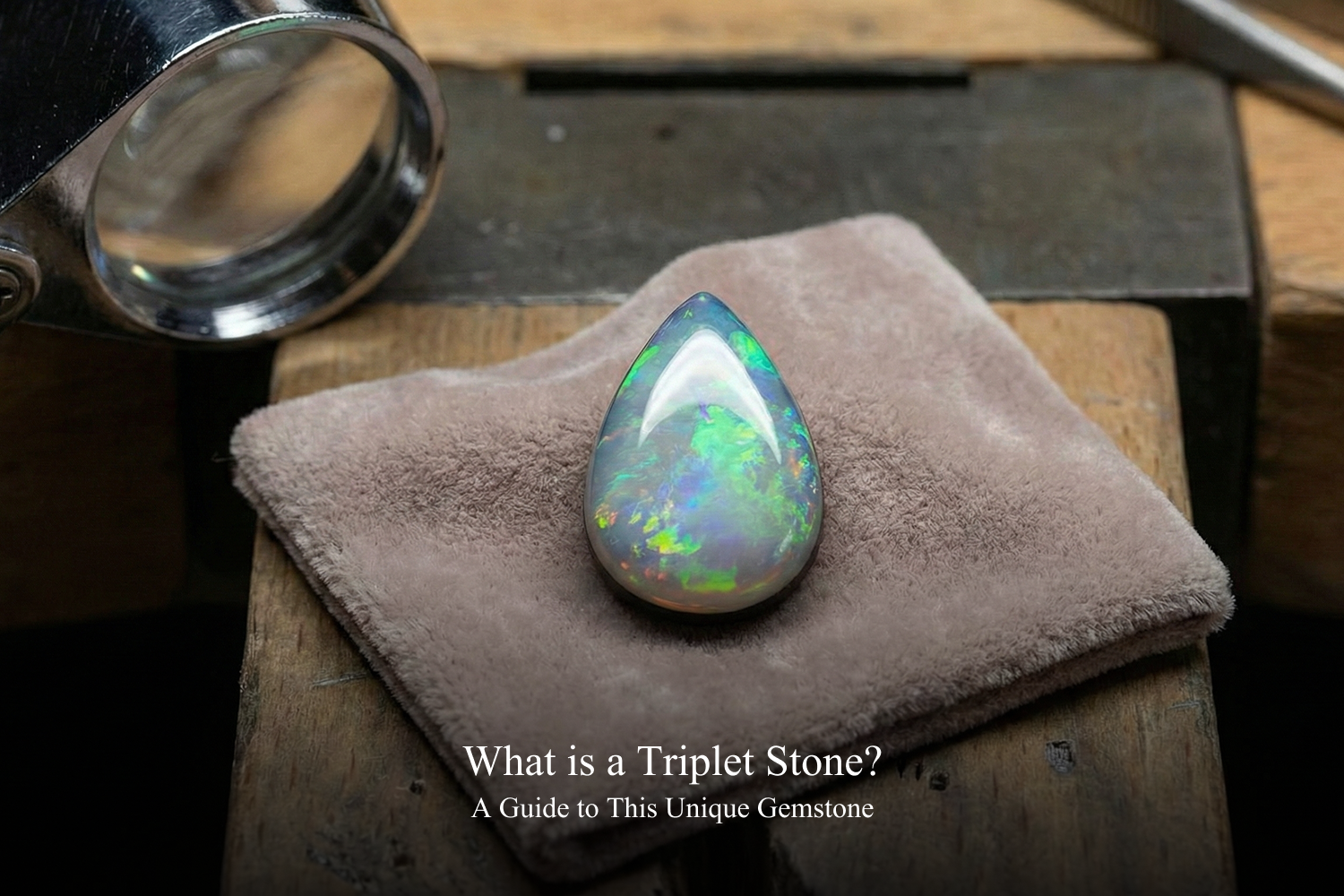
Most common? Opal doublet triplet designs. Opals are naturally fragile, so this construction makes them wearable without constant fear of cracking.
Triplet vs Solid Stones: Key Differences
Here's the breakdown:
Solid gemstones = One continuous piece. What you see is what you get. More valuable, more fragile in some cases.
Doublet stones = Two layers (stone + backing). No protective top.
Triplet gemstones = Three layers. Maximum protection, best color pop, but also the most "assembled."
The difference isn't about real vs fake. It's about construction methods.
A thin slice of natural opal in a triplet is still natural opal. Just engineered to last longer and look bolder.
Why Jewelers Use Triplet Stones
Because not everyone needs a $5,000 solid opal to feel the magic.
Composite gemstones serve a purpose:
→ They make stunning stones accessible (yes, that's the affordable gem option conversation)
→ They enhance color and durability without sacrificing beauty
→ They let artisans work with materials that would otherwise be too fragile
At Bahlko, triplet stones aren't shortcuts. They're intentional choices, crafted by hands that understand when construction improves wearability without compromising artistry.
Heritage isn't just about mining a stone whole. It's about knowing how to work with what nature gives you.
Pros and Cons of Triplet Stones
Let's be honest about composite gem pros cons:
Pros:
→ More durable than thin natural stones alone
→ Vibrant color (that black backing makes hues pop)
→ Can be worn daily without panic
→ Allows access to stones that would otherwise be out of reach
Cons:
→ Can't be resized easily (heat damages the layers)
→ Water exposure over time can cause separation
→ Lower triplet stone value than solid equivalents
→ Need to know what you're buying (transparency matters)
The key? Know it's a triplet going in. Treated gem ethics demand honesty.
How to Identify Layered Gems
To identify layered gems, check:
→ Side profile – Can you see distinct layers when you look from the edge?
→ Back of the stone – Is it flat and dark? That's usually the backing layer.
→ Magnification – Under a loupe, you might see glue lines or separation between layers.
If a jeweler won't tell you whether it's assembled stones or solid, walk away.
Bahlko doesn't play that game. Every piece comes with honesty about construction, materials, and why it was built that way.
Triplet Opal Care and Durability
Triplet opal care is non-negotiable if you want it to last:
→ Avoid prolonged water exposure (no shower jewelry)
→ Store away from heat (layers can separate)
→ Clean with a damp cloth, not ultrasonic cleaners
→ Have it checked annually if worn daily
With proper care, triplet gemstones can last years. Decades, even.
But they're not invincible. Respect the construction and it'll respect you back.
Styling Triplet Gemstone Jewelry
Triplet stones aren't "second-tier" jewelry. They're statement pieces with a story.
Wear them:
→ As bold pendants that catch light dramatically
→ In rings for special occasions (not daily handwashing wear)
→ As earrings where water exposure is minimal
→ Layered with oxidized silver for maximalist energy
Bahlko's triplet-stone designs honor the craft of assembly. Hand-finished settings. Stones chosen for their natural color before layering. Pieces built to be worn, not stored.
The Real Question
What is a triplet gemstone worth?
That depends on what you value.
If you want rarity and resale, go solid.
If you want wearable artistry that won't break your heart (or bank), triplet stones deliver.
Bahlko uses composite gemstones when they make the design stronger, bolder, more wearable, not as a cost-cutting trick.
Because heritage isn't just about what's mined. It's about what's made with intention.
FAQs
What exactly is a triplet gemstone in jewelry?
A triplet gemstone is an assembled stone with three layers: a backing (usually black), a thin slice of natural gemstone, and a clear protective top.
Common in opal doublet triplet designs for durability and color enhancement.
How is a triplet stone different from a doublet or a solid gem?
Solid gems are one continuous piece. Doublets have two layers (stone + backing). Triplet stones add a protective quartz or glass dome on top, making them the most layered of composite gemstones.
Do triplet stones last as long as natural solid gemstones?
With proper triplet opal care, avoiding water, heat, and harsh cleaners, they can last years. But they're more vulnerable than solid stones due to glue layers that can separate over time.
Are triplet gemstones considered real or fake?
Real. The gemstone layer is natural. Treated gem ethics require transparency, but calling them "fake" misses the point, they're engineered for wearability, not deception.
Triplet stone value lies in intentional construction, not imitation.
P.S. Would you choose a bold, layered stone you can actually wear, or a fragile "real" one that lives in a box?