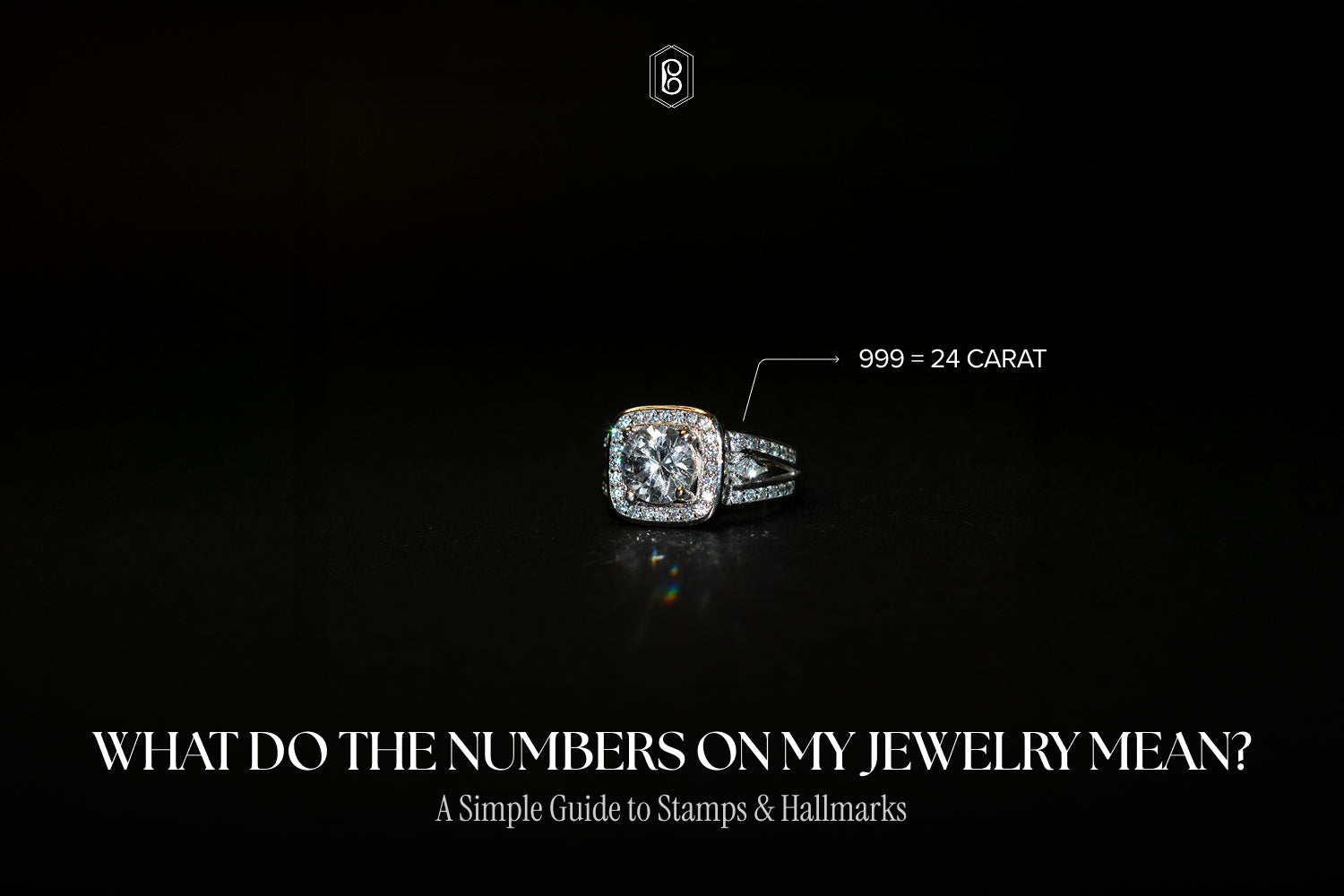
There is a quiet story written on every piece of jewelry, a story told not with words, but with tiny numbers and hallmarks etched into the metal.
They may be small, easy to miss, but they carry a world of meaning: purity, origin, and promise.
In the old streets of Jaipur, where gold dust drifts in the sunlight and the rhythm of artisans’ hands shapes every piece, these tiny marks are sacred.
They are proof that your jewelry is real, crafted with care, and carries heritage.
Understanding what the numbers on jewelry mean is more than reading a code. It’s about recognizing authenticity, respecting craftsmanship, and treasuring pieces that are meant to last for generations.
Table of Contents
-
The Purpose of Numbers, Stamps & Hallmarks
-
Common Number Markings and Their Meanings
-
Gold Jewelry Numbers: 10K, 14K, 18K & 24K
-
Silver Jewelry Hallmarks: .925, .950 & More
-
Platinum and Palladium Marks
-
How to Spot Real vs Fake Hallmarks
-
Vintage and International Jewelry Stamps
-
What to Do if Your Jewelry Has No Stamp
-
How Bahlko Ensures Hallmarking and Authenticity
-
Conclusion
-
FAQs
1. The Purpose of Numbers, Stamps & Hallmarks
Every mark, number, or stamp is a promise. It tells you three things:
-
Purity of metal – how much gold, silver, or platinum is actually there.
-
Origin – which jeweler, which workshop, or which country made it.
-
Authenticity – proof that it is not fake or merely plated.
These marks are the jewelry’s fingerprint. They tell the story of its creation, its journey from the artisan’s hand to yours, and its value, both material and emotional.
2. Common Number Markings and Their Meanings
Here are some marks you’ll often find:
-
10K, 14K, 18K, 22K, 24K – gold purity markings
-
.925, .950 – silver purity marks
-
PT950, PLAT, 999 – platinum or high-purity metals
-
Maker’s marks – initials, symbols, or workshop logos
-
Vintage or international stamps – different symbols, letters, or numbers depending on the country and year
Each mark is more than a number, it’s a seal of trust.
3. Gold Jewelry Numbers: 10K, 14K, 18K & 24K
Gold is measured in karats (K), which tell you the proportion of pure gold in the piece:
-
24K – nearly pure gold, soft, and bright yellow. It’s beautiful but delicate.
-
22K – 91 - 92% gold. Slightly harder, often used for traditional, daily-wear jewelry.
-
18K – 75% gold, 25% alloy. A balance of richness and strength, perfect for heirloom-quality pieces.
-
14K – 58 - 59% gold. Durable, holds up to everyday wear, with a slightly lighter yellow tone.
-
10K – 41 - 42% gold. Hardest and most durable, but less golden in color.
These markings help you understand jewelry durability, value, and care requirements, and whether your piece is an everyday wear or an investment.
4. Silver Jewelry Hallmarks: .925, .950 & More
Silver uses a fineness scale to show purity:
-
.999 – nearly pure silver, very soft, usually for special pieces.
-
.950 – 95% silver, often found in fine jewelry.
-
.925 – sterling silver (92.5%), the international standard for most quality jewelry.
You may also see “Sterling” written out. These numbers help you know the silver’s quality and how it will wear over time.
5. Platinum and Palladium Marks
Platinum and palladium pieces also have hallmarks:
-
Pt950 – 95% platinum
-
Pt900 – 90% platinum
-
Pd – sometimes palladium or platinum/palladium alloy
-
999 – very high-purity platinum
Platinum is dense, strong, and naturally resists tarnish, but these marks ensure you know exactly what you’re wearing.
6. How to Spot Real vs Fake Hallmarks
Not all stamps are trustworthy. Some may be decorative or misleading. Look for:
-
Depth and clarity – real hallmarks are crisp and precise.
-
Consistency – multiple pieces from the same brand should have similar marks.
-
Metal behavior – gold and silver should react as expected; if it tarnishes quickly or feels too light, double-check.
-
Certification – trusted jewelers often provide a certificate confirming purity.
Understanding hallmarks helps you separate truth from appearance.
7. Vintage and International Jewelry Stamps
Vintage and foreign pieces may have different markings:
-
British and European pieces often include symbols, letters, or numbers indicating the assay office, year, or purity.
-
Older stamps might say 18 ct instead of 18K, or 585 for 14K gold.
-
Maker’s marks may be unique initials or logos.
-
International hallmark standards vary, so 750 gold in Europe is 18K gold elsewhere.
Learning these symbols lets you appreciate the story behind each piece.
8. What to Do if Your Jewelry Has No Stamp
Some pieces, especially vintage or artisan-made jewelry, may have no hallmark. It doesn’t always mean fake:
-
Professional testing – assays, acid tests, or XRF machines can check metal purity.
-
Observe wear and color – solid metals have weight, shine, and scratch patterns; plated metals often show base metal at edges.
-
Trust provenance – buy from reputable artisans or brands who document their work.
Even without a stamp, your jewelry can carry authenticity if backed by expertise and care.
How Bahlko Ensures Hallmarking and Authenticity
At Bahlko, we see hallmarks not as a legal requirement but as a promise.
-
Every gold piece is stamped with its karat purity.
-
Sterling silver pieces carry .925 marks.
-
Platinum pieces are marked Pt950 where applicable.
-
Maker’s mark – a discreet symbol showing it is crafted in our ateliers.
-
Quality control ensures that marks remain clear, even after polishing and finishing.
These small details honor the metal, the artisan, and the person wearing it.
Conclusion
Numbers and hallmarks are more than technical codes. They are trust, history, and craftsmanship compressed into a tiny mark.
When you understand gold purity markings, silver numbers, and platinum hallmarks, you hold knowledge as well as beauty.
Every Bahlko piece is marked and documented to assure you that your jewelry is not just worn - it is lived, treasured, and passed down.
Understanding these stamps connects you to the story of the metal, the hand that made it, and the journey it has traveled.
FAQs
1. What does 925 mean on a ring or necklace?
It indicates sterling silver – 92.5% pure silver mixed with 7.5% other metals for durability.
2. Is 750 gold real or fake?
It’s real gold, representing 75% pure gold, equivalent to 18K.
3. How can I tell if my jewelry is gold, silver, or plated?
Look for stamps, feel the weight, and observe metal behavior. When in doubt, professional testing helps.
4. Why do some pieces have no hallmark at all?
Some vintage or artisan pieces may lack stamps. That doesn’t mean fake, but it requires care, testing, and provenance verification.