The Ultimate Guide to Gemstone Pendant Setting Ideas
A gemstone pendant looks simple from far away. A stone. A chain. A little sparkle at the collarbone.
But the real magic is not only the gemstone. It is the setting.
The setting decides how much light enters the stone, how secure it feels on your body, and whether it becomes your everyday piece or your special occasion only piece. That is why understanding gemstone pendant setting ideas matters before you choose. A setting is not a tiny technical detail. It is the whole wearing experience.
Bezel Settings: Protection with a Modern Edge
A bezel setting wraps metal around the edge of the gemstone, hugging the stone like a frame.
Bezel set pendants are loved for security, clean lines, and low snag risk. If your pendant is going to be worn daily, protective pendant bezels are one of the smartest choices you can make. They also feel more comfortable against skin because there are no protruding prongs.
If you want gemstone pendant setting ideas that blend practicality with style, bezel is always near the top.
The Dreambound Half Moon Pendant from Bahlko reflects this sensibility: a close, protective hold that lets the stone's natural character read clearly without overexposing it to daily wear and tear.
Prong Settings: For Maximum Light and Brilliance
A prong setting holds the gemstone with small metal claws, leaving more of the stone exposed. More exposure means more light enters, which means a brighter, more lively appearance.
A prong setting necklace often looks more sparkly, especially with transparent or translucent stones. Prong settings are also the most recognizable pendant setting styles, carrying an effortlessly classic appeal.
One lifestyle note: prongs can snag more easily than bezels, and they require clean, precise craftsmanship so the stone stays secure. If brilliance is your priority and quality craftsmanship is confirmed, a prong setting necklace is a compelling choice.
Halo Settings: Presence Without a Large Center Stone
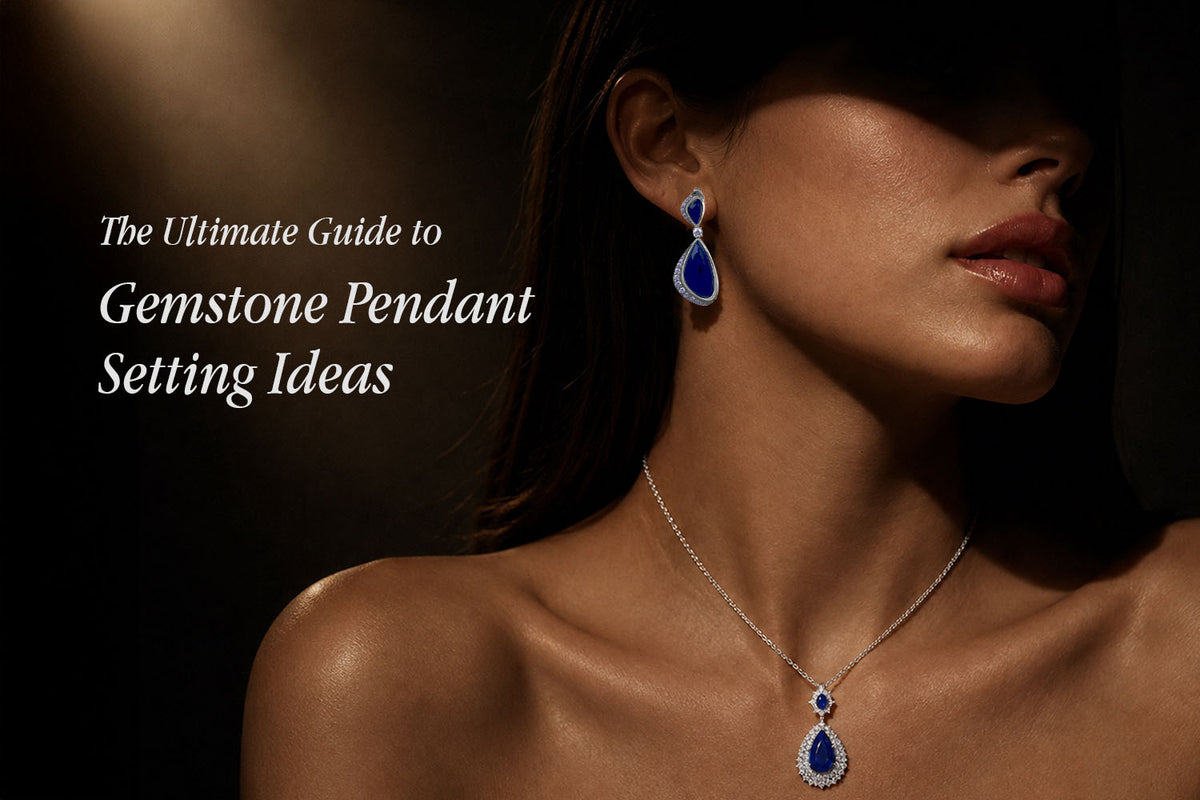
A halo setting surrounds the center gemstone with a ring of smaller stones or detailed metalwork. It adds a framing effect that makes the center stone appear larger and more dramatic.
Halo pendant designs are ideal when you want extra sparkle, a more ornate look, or a pendant that reads as dressed up from across the room. Some halos lean modern, others lean vintage pendant mountings with an old-world warmth that pairs beautifully with richly colored stones.
For a statement pendant that does not require a large center stone, halo pendant designs deliver presence at every scale.
The Imperial Aureole Pendant and Trinity Lavender Pendant are crafted with exactly this layered intentionality, stones held and framed by hands trained across three decades of gemstone work through Vision Gems Pvt. Ltd.
Solitaire Settings: One Stone, Total Focus
Solitaire means one stone, center stage. A solitaire pendant mounting is simple, elegant, and enduring. It gives the gemstone room to be the main character without competition.
Solitaire pendant mounting works with prongs, bezels, or basket structures, and these pieces layer beautifully with other necklaces without competing for attention. Among gemstone necklace designs, solitaire stays the most versatile and the least likely to feel dated over time.
Flush and Channel Settings: Contemporary and Secure
Less commonly seen in pendants than in rings, flush and channel settings are underrated for daily wear. Flush means the stone sits close into the metal surface. Channel means stones sit between two metal walls in a clean line.
Both are smooth, secure, and contemporary, making them strong candidates for custom pendant settings where a structured, minimal look is the goal. Among all pendant setting styles, these are the most low-maintenance options.
How Metal Choice Changes Everything
The same stone reads differently depending on the metal around it.
-
Yellow tones warm up gemstones and add richness
-
White tones make stones look crisp and bright
-
Rose tones add softness and romantic warmth
Pendant metal options shape the entire visual language of a piece. When choosing, consider your wardrobe tones, skin undertone, and the metals you already wear. The right combination is immediate. The wrong one loses impact quietly.
Matching Settings to Gemstones and Lifestyle
Not every gemstone should be set the same way, and not every lifestyle suits every setting.
Explore the full range of gemstone pendant settings to understand how different structures hold and present different stones before deciding.
For daily wear and active lifestyles, protective pendant bezels and smooth designs reduce risk. For maximum sparkle and light, a prong setting necklace delivers. For ornate and event-ready presence, halo pendant designs and vintage pendant mountings create richer visual weight.
The Sea Quartz Anchor Pendant, Twinned Full Moon Flip Pendant, and Thales Key Pendant each demonstrate a different structural approach to how a stone can be held, offering a useful reference across types of pendant settings when deciding what suits your stone and your day.
FAQs
What are the most popular gemstone pendant setting types?
Bezel, prong, halo, and solitaire styles are the most common because they balance beauty, security, and wearability across different tastes.
What is a prong setting and when should I use it?
A prong setting holds the stone with small metal claws and allows maximum light entry. Use it when brilliance is the priority and quality craftsmanship is confirmed.
How does a bezel setting differ from a prong setting?
A bezel wraps metal around the stone edge for a sleek, protective hold. A prong exposes more of the stone for sparkle but can snag more easily without careful finishing.
What is a basket setting for pendants?
A basket setting is a structured metal framework beneath the stone that provides support while keeping the design open for light and visual lift.
Should I choose an open-back or closed-back pendant setting?
Open-back settings allow more light and can enhance sparkle. Closed-back settings add structure and a different visual weight, depending on the stone type and design intent.