Table of Contents
-
The Language of Color in Gemstones
-
Clarity: The Story Within Every Inclusion
-
Cut: Precision That Shapes Light
-
Carat: Weight, Size, and the Illusion of Grandeur
-
Treatments: Nature’s Truth and Human Touch
-
Comparing Rubies, Sapphires, and Emeralds
-
Buying Guide: Lab Reports, Certification, and Provenance
-
How Bahlko Upholds Quality and Ethical Sourcing
-
Conclusion: The Art of Seeing Beyond Sparkle
-
FAQs
The Language of Color in Gemstones
Color is where every gemstone begins its story. Unlike diamonds, judged by the absence of hue, colored gemstones are celebrated for their depth, warmth, and personality.
Gemologists look at three key aspects: hue, tone, and saturation.
-
Hue is the basic color, ruby’s red, sapphire’s blue, emerald’s green.
-
Tone describes how light or dark that hue appears.
-
Saturation reveals how pure and vivid the color feels.
A gemstone with rich, even saturation captures light in a way that feels alive like watching dusk settle over Jaipur’s sandstone walls.
Too dark, and the gem looks heavy. Too light, and it loses depth. The balance between the two is where beauty lives.
At Bahlko, our artisans choose stones not just by laboratory standards but by emotion. A ruby that glows softly under candlelight, a sapphire that deepens under the morning sun, color should move you before it impresses you.
Quick Tip:
When assessing color, look for evenness. If the color feels patchy or uneven, it may indicate lesser quality or poor cutting.
Clarity: The Story Within Every Inclusion
Every gemstone carries the marks of its journey, microscopic inclusions that formed over millions of years. These are not flaws; they are signatures of authenticity.
Unlike diamonds, where clarity defines perfection, colored gemstones are forgiven, even celebrated, for their natural inclusions.
In emeralds, they’re called jardin (French for “garden”), a poetic nod to the tiny moss-like patterns inside.
Gemologists use the gem clarity scale to evaluate transparency, but what truly matters is whether a gem appears “eye-clean”, free of visible inclusions to the naked eye.
Some inclusions can even enhance value. In star sapphires, for example, rutile needles create the mesmerizing six-pointed star effect known as asterism.
At Bahlko, we treat inclusions with reverence, they are the fingerprints of nature, proof that no two stones are ever alike.
Pro Tip:
Avoid stones that are heavily fractured or cloudy. Look for gems with life, those that let light pass through like soft silk, not frosted glass.
Cut: Precision That Shapes Brilliance and Depth
Cutting a gemstone is not simply shaping, it is storytelling. The cutter decides how light will dance, where brilliance will pause, and how each facet will reveal color.
Unlike diamonds (which follow strict proportions), colored gemstones are cut to enhance color rather than symmetry.
-
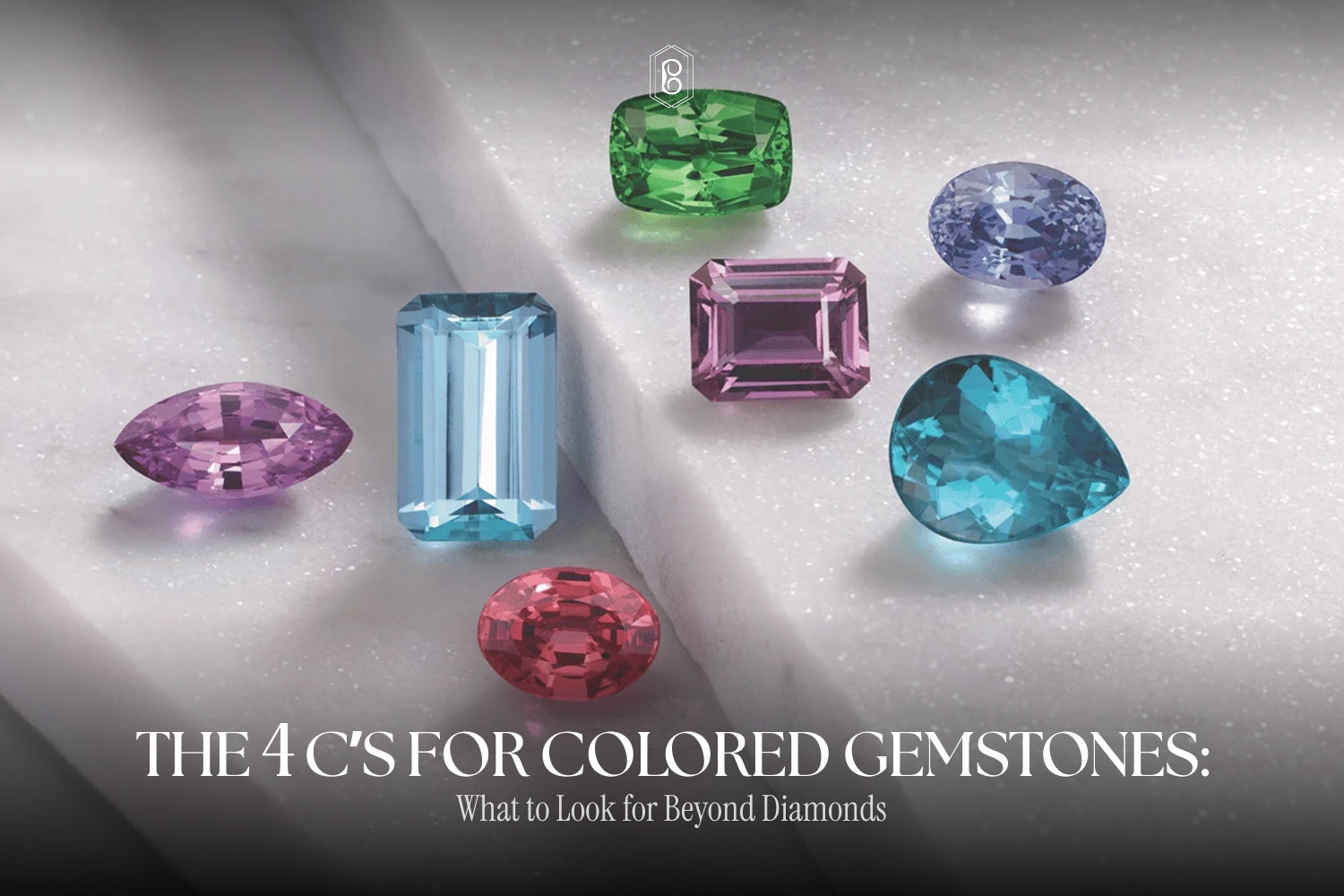
Brilliant cuts amplify sparkle, ideal for lighter stones like aquamarine.
-
Step cuts highlight color and depth, perfect for emeralds.
-
Cabochons reveal smooth, glowing surfaces, used for opals and moonstones.
Master cutters understand that each gemstone holds its own light map. Too shallow a cut, and the color appears pale. Too deep, and the center looks dark.
Every Bahlko gemstone passes through experienced hands trained in Jaipur’s gemstone quarters, where artisans have perfected the balance of color, proportion, and emotion.
Look for:
-
Symmetry of facets
-
Even polish
-
Lively brilliance from every angle
Because a well-cut stone doesn’t just reflect light, it reflects mastery.
Carat: Weight vs Visual Impact in Colored Stones
Carat weight tells only half the story. Two gemstones of the same carat can appear vastly different in size, depending on density, cut, and depth.
For example, sapphires and rubies are denser than diamonds, meaning a one-carat sapphire may look smaller than a one-carat diamond.
That’s why visual balance often matters more than numerical weight. A lighter gem with ideal proportions can look more striking than a heavier, poorly cut one.
At Bahlko, our artisans choose gemstones based on how they present themselves, how they sit against skin, how they catch light in motion, not on their scale.
Quick Tip:
If you’re comparing two gemstones, hold them side by side. Trust your eyes more than the number on the certificate.
Treatments: Nature’s Truth and Human Touch
Many gemstones undergo treatments to enhance color or clarity. Heat treatment, for instance, is a centuries-old practice that intensifies hue.
Others, like fracture filling or dyeing, alter appearance more significantly.
The key lies in transparency, knowing what has been done.
At Bahlko, every gemstone comes with complete disclosure, because we believe that truth enhances value.
-
Untreated gemstones are rare, often commanding higher prices.
-
Lightly treated stones (like heat-treated sapphires) remain stable and authentic.
-
Heavily treated stones may lose value or durability over time.
When you buy a gemstone, you’re not just purchasing beauty, you’re investing in integrity.
Always ask for:
-
Disclosure of treatments
-
Certification from recognized gemological labs (GIA, IGI, GRS)
Comparing Rubies, Sapphires, and Emeralds
Each of the “Big Three” has its own personality and standards:
Ruby – prized for its vivid red hue, symbolizing passion and power. The most valued shade is “pigeon’s blood” red, neither too dark nor too pink.
Sapphire – found in every color except red, but deep royal blue remains the benchmark. The finest sapphires hold color evenly across the stone.
Emerald – admired for its velvety green tone and unique inclusions. Almost all emeralds contain jardin, which adds character rather than flaw.
While diamonds sparkle with precision, colored gemstones glow with soul. Their beauty lies in nuance, the way they shift under changing light, the imperfections that make them unmistakably human.
Buying Guide: Lab Reports, Certification, and Provenance
A gem’s value is rooted not only in its appearance but in its provenance and documentation.
Ask for certification from trusted institutions like:
-
GIA (Gemological Institute of America)
-
IGI (International Gemological Institute)
-
GRS (GemResearch Swisslab)
These reports authenticate:
-
Whether the gemstone is natural or synthetic
-
Details of treatment
-
Geographic origin (such as Kashmir sapphires or Burmese rubies)
Origin affects value because it reflects geological rarity and historical prestige. A sapphire from Sri Lanka tells a different story than one from Madagascar.
At Bahlko, we trace each gemstone’s journey from mine to master cutter, from artisan to atelier, so our clients know not just what they’re wearing, but whose hands shaped it.
How Bahlko Upholds Quality and Ethical Sourcing
For over 35 years under Vision Gems Pvt. Ltd., Bahlko has combined gemstone expertise with ethical integrity.
Our process begins with responsible sourcing, working only with partners who uphold fair labor and environmental standards.
Each gemstone undergoes multiple layers of inspection and is cut by artisans whose techniques are passed down through generations in Jaipur.
Every finished piece represents a conversation between nature, craft, and conscience.
This is what sets Bahlko apart:
-
Transparent certification for every gemstone
-
Artisanal cutting rooted in heritage
-
Quality that is measurable not only in carats but in care
Conclusion: The Art of Seeing Beyond Sparkle
When you hold a gemstone, you hold a fragment of the earth’s memory, compressed time, heat, and beauty, shaped by human devotion.
The 4Cs of colored gemstones, color, clarity, cut, and carat are not just grading tools; they’re a language. And learning that language allows you to choose with both intellect and instinct.
At Bahlko, we invite you to look beyond brilliance to see craftsmanship, legacy, and emotion reflected in every facet. Because the rarest gem is not the one that shines brightest, but the one that tells the truest story.
Discover the art of gemstone mastery. Discover Bahlko.
FAQs
1. What makes one colored gemstone more valuable than another?
Value depends on color saturation, clarity, origin, and treatment. Untreated stones with vivid color and high transparency are often the most prized.
2. How do gem labs grade clarity and color in colored stones?
Labs use comparative visual grading under standardized lighting, assessing transparency, hue, tone, and inclusions.
3. Does gemstone treatment affect value or durability?
Some treatments, like heating, are stable and accepted. Others, such as dyeing or fracture filling, may reduce long-term value or stability.
4. Does a larger carat always mean a better gemstone?
Not necessarily. A smaller gem with exceptional color and cut can appear more beautiful than a larger one with poor proportions.