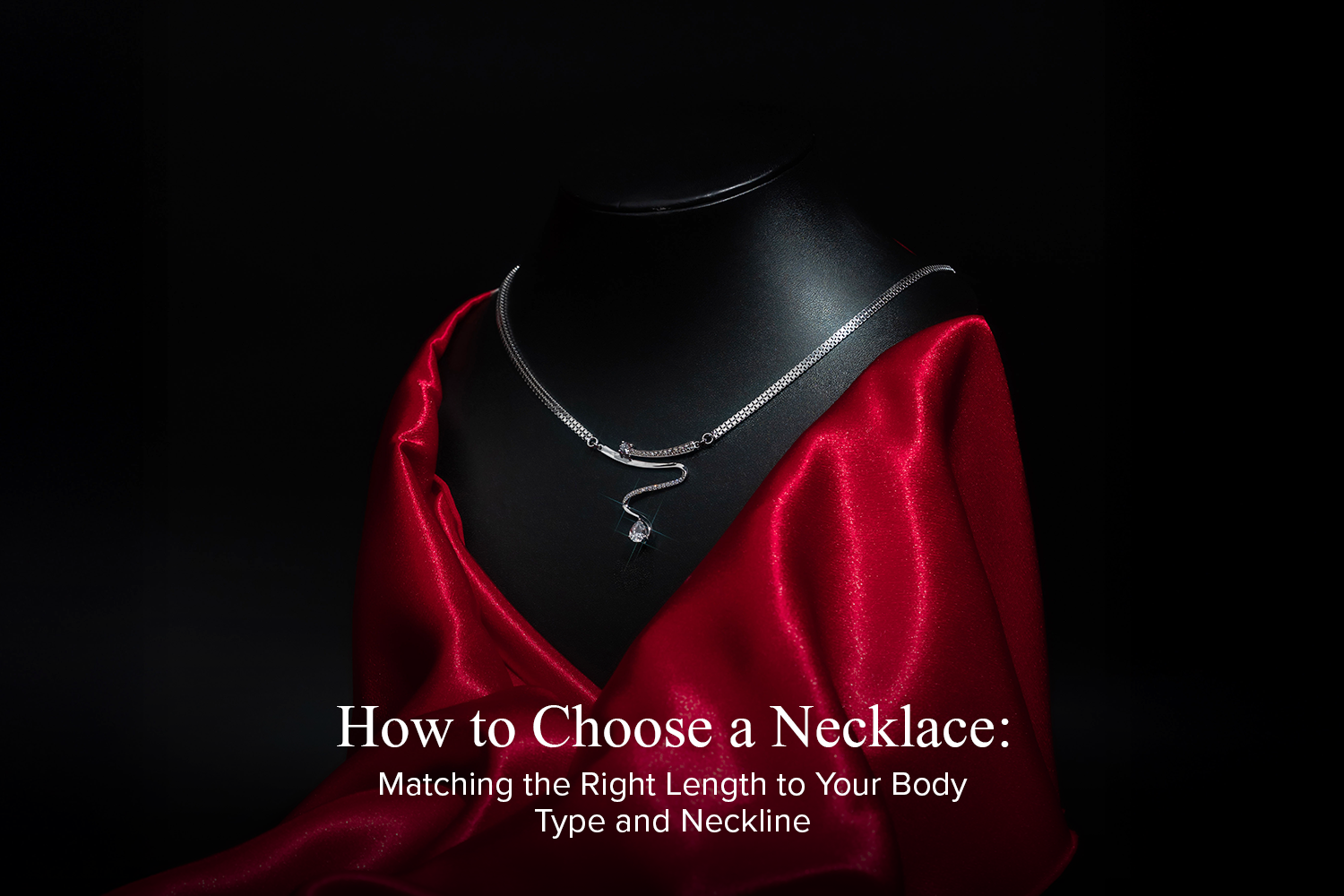
There's a moment most of us know, standing in front of the mirror, a beautiful necklace in hand, putting it on and feeling like something's just slightly off. Not because the piece isn't lovely. But because the length isn't quite right, or it's disappearing into a busy neckline, or it's cutting your collarbone at an awkward angle.
Knowing how to choose a necklace isn't about following rigid rules. It's about understanding proportion, your body, your outfit and then wearing whatever makes you feel like the most confident version of yourself. Once you understand a few simple principles, this necklace length guide becomes second nature.
Let's walk through all of it.
Why Necklace Length Matters: Flattering Your Body Type
The first thing to understand when thinking about how to choose a necklace is that necklace length creates a visual line on your body. Where that line falls and how it interacts with your frame makes a real difference in how the whole look comes together. This is essentially your necklace fit and proportion guide, understanding how each length behaves on different frames.
-
Shorter neck: Longer necklace lengths tend to work better. Chokers and very short collars can emphasize a shorter neck. A princess-length necklace (17-19 inches) or longer sits below the neckline and draws the eye downward, which creates a lengthening effect. This is one of the most important factors to keep in mind when choosing flattering necklace styles for your frame.
-
Petite or smaller frame: When thinking about the right necklace for body type, delicate, finer chains and smaller pendants tend to feel proportionate. An oversized statement piece on a petite frame can overwhelm rather than accent. That said, if bold is your personality, wear it confidently. Proportion is a guide, not a law.
-
Fuller bust or curvier figure: Longer necklaces, matinee length (20-24 inches) and beyond are particularly flattering. They follow the natural lines of the body and create an elongating effect. Shorter necklaces that sit on the chest can sometimes interrupt the line of your silhouette. Understanding the right necklace for body type makes all the difference here.
-
Taller or longer torso: You have real freedom here. Almost every necklace length works beautifully on a longer frame. You can pull off layered lengths, statement pieces, and opera-length necklaces with ease.
The most important thing? A necklace fit and proportion guide like this is a starting point, not a rulebook. Wear what you love.
Choosing the Right Necklace for Your Neckline
This is where most people get stuck, and honestly, it's the most useful piece of information you can have when figuring out how to choose a necklace. Getting your necklace and neckline pairing right is what makes everything just click.
-
V-neckline: Follow the V. A pendant necklace or a longer chain that mirrors the shape of the neckline is your best friend here. Princess and matinee lengths both work beautifully. Avoid chokers with a deep V, they tend to create visual tension rather than harmony. This is one of the most classic necklace and neckline pairing rules for a reason.
-
Crew neck or round neckline: This neckline is quite forgiving. A choker, collar, or short princess-length necklace sits beautifully just above or along the neckline. You can also go longer with a pendant that falls just below the collar, it creates a lovely layered effect even when worn alone.
-
Off-shoulder or sweetheart neckline: These necklines already do the work of drawing the eye to the collarbone area. A delicate collarbone necklace or a bold statement piece that sits right at the collarbone can be stunning. This is a great opportunity to let an intricate or detailed piece really shine, and speaks directly to the rising collarbone necklace trends we've seen across styling boards. The Celestial Dawn Wings Necklace, with its rhodium-plated silver wings cradling a luminous natural rose quartz, is exactly this kind of piece, something that comes alive against an open neckline.
-
High neck or turtleneck: Skip the necklace entirely, or go long. A layered set of long chains or a single opera-length necklace draped over a turtleneck is effortlessly elegant. Shorter necklaces simply don't have room to breathe with a high neck.
-
Scoop neck: Very versatile. A mid-length pendant or a layered necklace look both work here. The open neckline gives you space to play.
-
Strapless or halter: Again, collarbone territory. This is the moment for a bold collar necklace, a chandelier-style piece, or a layered collarbone necklace look, perfectly in line with collarbone necklace trends that continue to dominate effortless, elegant styling. Something that frames the neck and shoulders beautifully.
Popular Necklace Lengths Explained: Choker, Princess, Matinee, and More
If you've ever looked at a necklace sizing chart and felt confused by all the names, here's a simple breakdown. Consider this your go-to reference whenever you need to figure out how to choose necklace length for a specific look or occasion.
-
Collar (12-13 inches): Sits high on the neck, right against the throat. Best for open necklines.
-
Choker (14-16 inches): Sits at the base of the neck, on or just below the collarbone. One of the most popular necklace lengths right now, the choker necklace trend has had a real moment, and it doesn't seem to be going anywhere. Works beautifully with V-necks, off-shoulder tops, and open collars.
-
Princess (17-19 inches): The most classic and versatile length on any necklace sizing chart. Sits just below the collarbone. Works with almost every neckline. If you're buying your first necklace or looking for an everyday piece, this is the length that never fails.
-
Matinee (20-24 inches): Falls between the collarbone and bust. Elegant and slightly more dramatic than princess length. Beautiful with both casual and formal outfits.
-
Opera (28-36 inches): A longer, more statement-making length. Often worn as a single strand or doubled. Works particularly well with formal wear or high-neck tops.
-
Rope (37 inches and above): The longest category. Can be wrapped, knotted, or layered for maximum impact. A real statement piece.
For everyday wear, most people find themselves reaching for princess and matinee lengths most often. But having a choker and a longer piece in your collection gives you real range. Understanding how to choose necklace length for each situation is the foundation of a thoughtfully built jewelry wardrobe.
How to Match Necklace Style to Your Outfit
The length is one part of the equation, the style of the necklace matters just as much when it comes to necklace for outfit styling. Once you know how to choose a necklace that suits your body and neckline, the next layer is matching it to your wardrobe.
-
Casual everyday outfits: Keep it simple and personal. A fine chain with a small pendant, a delicate druzy stone necklace, or a simple oxidized silver piece adds interest without demanding attention. These are your most-reached-for flattering necklace styles for daily wear.
-
Workwear: Princess-length or matinee-length necklaces in classic metals, sterling silver, gold-tone, tend to read as polished and put-together. Avoid very long, swinging chains if you're moving around a lot. A well-crafted pendant with a clean silhouette is always a strong choice for necklace for outfit styling in professional settings.
-
Evening and formal wear: This is when you get to bring out the statement pieces. A bold, multi-stone necklace, a layered set, or a sculptural collar piece can elevate even a simple dress into something memorable.
-
Ethnic and traditional wear: Longer, ornate necklaces with intricate detail work tend to complement embroidered and richly textured fabrics beautifully. The key is balance, if the outfit is heavily embellished, a single bold necklace rather than layers tends to work better.
-
Minimalist outfits: Paradoxically, a maximalist necklace looks incredible against a plain white shirt or a solid-color dress. The simplicity of the outfit gives the necklace room to tell its story, and this is one of the most impactful flattering necklace styles pairings you can put together.
Layering Necklaces: Tips for a Balanced Look
Layering necklace lengths is one of the most enjoyable things you can do with jewelry and it's more achievable than it looks. Once you understand how to choose a necklace in isolation, layering is simply the next step.
The golden rule of layering necklace lengths is contrast. You want each necklace to be clearly visible and sit at its own distinct level. If two necklaces are too close in length, they tangle and compete. Aim for at least 2-3 inches of difference between each layer.
A simple layering formula that works every time: start with a choker or very short necklace, add a princess-length piece in the middle, and finish with a longer pendant or matinee-length chain. Three distinct levels, three distinct stories. This is your foundational framework for layering necklace lengths with intention. The Deepshore Larimar Glow Necklace, with its luminous natural larimar stone glowing at 18 inches, layers beautifully as a mid-tier piece over a delicate chain and beneath a longer, more sculptural pendant.
Mix textures and weights thoughtfully. A delicate chain layered with something slightly chunkier or more ornate creates visual interest. A uniform set of chains in the same weight can feel a bit flat.
You don't need to invest in a full layered set at once, start with two pieces and see how they sit together before adding a third.
Necklace Materials and Designs to Complement Your Style
The material and design of a necklace affects not just how it looks but how it feels to wear and how it interacts with your skin tone. This is another dimension of knowing how to choose a necklace that goes beyond just length, and ties directly back to your personal necklace fit and proportion guide.
-
Sterling silver and oxidized silver: Cool, clean, and versatile. Oxidized silver, silver with a darkened, antique-like finish adds depth and character. It tends to look particularly striking against warm skin tones, but honestly, it's flattering on everyone.
-
Gold and gold-tone: Warm metals tend to complement warm and medium skin tones beautifully. Yellow gold against a tan or brown skin tone is genuinely stunning.
-
Rose gold: Sits somewhere between warm and neutral. Flattering on a wide range of skin tones, particularly lovely on fair and medium complexions.
-
Gemstone necklaces: The stone color matters here too. Deep greens and purples, peridot, amethyst tend to complement both warm and cool skin tones. Blues work beautifully on cool-toned skin. Warm oranges and reds look incredible against deeper skin tones.
-
Druzy stones: Druzy is a natural stone surface covered in tiny glittering crystals, it catches light in a completely unique way. A druzy pendant necklace in sterling silver is one of those pieces that works across casual and formal outfits and suits almost any skin tone. The Auric Lozenge Necklace, with its square-cut golden druzy stone set in a hand-finished silver frame, is a compelling example of how this material translates into something genuinely wearable yet unmistakably special. If you haven't tried one yet, it's worth exploring.
Common Mistakes When Choosing Necklace Lengths
A few things to keep in mind so you don't end up with a piece that sits in a drawer. These are the most common missteps people make when figuring out how to choose a necklace, and they're all easily avoidable.
-
Buying without knowing your neckline habits. Think about what you actually wear most. If 80% of your wardrobe is crew necks and round collars, invest in lengths that work with those first. Your necklace and neckline pairing decisions should always start with your wardrobe reality.
-
Ignoring the pendant size. A very large pendant on a very long chain can look unbalanced. A tiny pendant on a very short, thick chain can feel disproportionate too. Think about the pendant in relation to the chain weight and length together, it's all part of your personal necklace fit and proportion guide.
-
Layering too many pieces without contrast. More isn't always more, unless there's clear separation between each layer. Three similar-length chains usually just looks like a tangle. Going back to the basics of layering necklace lengths always helps here.
-
Forgetting about the back. Some pieces have beautiful detailing on the clasp or the chain end. Don't forget that a necklace has a back, and it's worth being thoughtful about what it looks like.
-
Only buying one length. If princess length is all you own, you're missing a lot of opportunity. Even just adding a choker or a matinee-length piece to your collection opens up a lot of necklace for outfit styling possibilities.
How to Measure Your Neck for the Perfect Necklace Fit
This is simpler than it sounds, and it's the last piece of the puzzle when learning how to choose necklace length with confidence. All you need is a flexible measuring tape or even a piece of string and a ruler.
Wrap the measuring tape around the base of your neck, where a collar would typically sit. This is your base neck measurement. For a choker, add 1-2 inches to this number. For a princess-length necklace, add 4-6 inches.
Most necklaces come with an extender chain of 1-2 inches, which gives you flexibility. When shopping online and in doubt, go slightly longer, you can always use a shorter part of the chain.
A quick reference from our necklace sizing chart: the average adult neck measures between 13 and 15 inches. A standard choker at 14-16 inches will sit comfortably on most people. If you have a broader neck or prefer a looser fit, look for 16 inches or opt for adjustable chains.
FAQs
Which necklace styles work best with different necklines?
V-necks love pendant necklaces that follow the V shape. Crew necks pair beautifully with chokers and princess-length pieces. Off-shoulder and strapless necklines shine with collarbone necklaces and bold collar pieces, right in line with current collarbone necklace trends. High necks call for longer, dramatic lengths or no necklace at all. Getting your necklace and neckline pairing right is truly the foundation of any great jewelry look.
What are the most popular necklace lengths and their uses?
Princess length (17-19 inches) is the most versatile and widely worn, it works with almost everything. Choker length (14-16 inches) is on-trend and very wearable for everyday looks. Matinee (20-24 inches) is elegant and slightly more formal. Opera and rope lengths are statement-making and best for formal or deliberate styling moments. Use our necklace sizing chart as your quick-reference guide when in doubt.
Which necklace materials flatter different skin tones?
Silver and oxidized silver tend to complement cool and neutral skin tones, though they're genuinely versatile. Gold flatters warm and olive skin tones beautifully. Rose gold is flattering across a wide range. For gemstones, deep jewel tones, amethyst, peridot, deep blue work across most skin tones, while warm stones like garnet or citrine tend to look especially beautiful on deeper, warmer skin. Considering material alongside the right necklace for body type gives you a complete picture of what will truly work for you.
Knowing how to choose a necklace is one of the more personal decisions in how you put yourself together, because a necklace lives close to your face, close to your collarbone, close to the parts of you that people look at when they talk to you. It's worth getting right. Not perfectly, not rigidly, but thoughtfully.
Understanding length, necklace and neckline pairing, and proportion gives you a framework, but within that framework, there's a lot of room to be yourself. That's always the best starting point.
If you're ready to find a piece that feels entirely like you, explore Bahlko's necklace collection, handcrafted in sterling silver, druzy, and natural gemstones, made for those who wear their jewelry with intention.